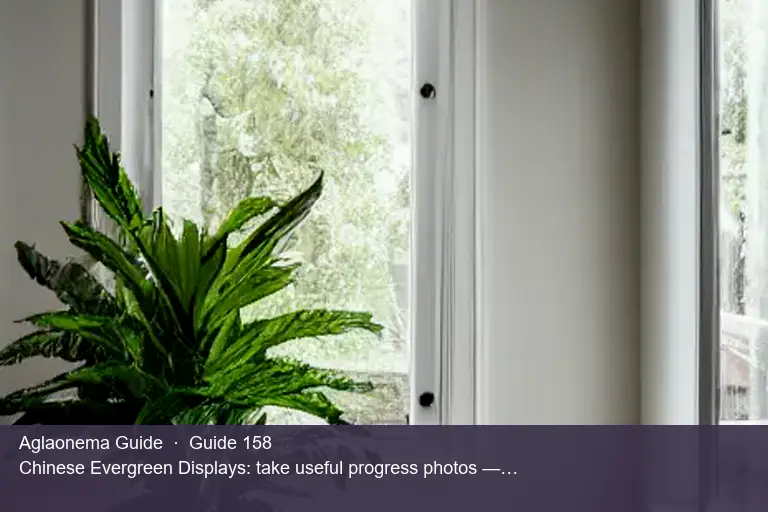
Chinese Evergreen Displays: take useful progress photos — trial protocol for a temporary work area; setup for a first project
### Chinese Evergreen Displays: Take Useful Progress Photos
Evergreen displays have become an essential tool for many businesses, especially those that require visual displays for presentations, announcements, or signage. In the context of a temporary work area, these displays are pivotal in facilitating communication and coordination. By taking useful progress photos, you can capture the essential features of the display, ensuring that your team can quickly identify and understand the intended message.
#### Scope
For a first project, the Chinese evergreen display should be designed and installed in a small, enclosed space to ensure minimal distractions and to facilitate easy access and visibility. This should be a temporary work area, such as a conference room, boardroom, or office. The display should be large enough to accommodate the necessary information and to be easily accessible for employees.
#### Setting Up
- **Design the Display**: Ensure the display is large enough to accommodate all the necessary information and is easily accessible for employees. Consider the size and layout of your work area to ensure it is manageable while still providing enough space for everyone.
- **Materials**: Use high-quality materials for the display, including glass, metal, or plastic, depending on the size and function of the display. Ensure the display is durable and can withstand the weight of materials and people.
- **Design the Display**: Use high-quality materials for the display, including glass, metal, or plastic, depending on the size and function of the display.
- **Install the Display**: Install the display in the designated space, ensuring it is easily accessible for employees and is not obstructing other work areas.
#### Taking Useful Progress Photos
To take useful progress photos of your Chinese evergreen display, you can use a high-quality camera. Here’s how you can do it:
- **Choose the Right Camera**: Select a high-quality camera that can capture clear and detailed images. Consider the resolution and frame rate of the camera, as these will determine the quality of the photos.
- **Position the Camera**: Position the camera at the right angle to the display, ensuring it is level with the display. This will ensure the camera captures the display in its entirety, regardless of its angle.
- **Observe the Display**: Observe the display from multiple angles to capture different aspects of the display. This will help you identify the key features and details of the display.
- **Take the Photos**: Once you have observed the display from multiple angles, take the photos. Make sure to include the display in the photos, as well.
#### Common Mistakes and Solutions
- **Misaligned Camera**: Ensure the camera is aligned with the display. Misaligned cameras can result in blurry or unclear photos.
- **Too High Resolution**: Using a camera with a high resolution may result in blurry or unclear photos. Use a camera with a lower resolution for better clarity.
- **Obstructedible Space**: Ensure the space around the display is not obstructed by other work areas or furniture. This will help you capture the display in its entirety without being hindered.
- **Not Level**: Ensure the camera is level with the display. Oblique cameras can result in blurry or unclear photos.
#### Conclusion
Taking useful progress photos of your Chinese evergreen display is essential for capturing the essential features of the display and ensuring that your team can quickly identify and understand the intended message. By using a high-quality camera, you can capture the display in its entirety, ensuring that your team can quickly identify and understand the intended message.