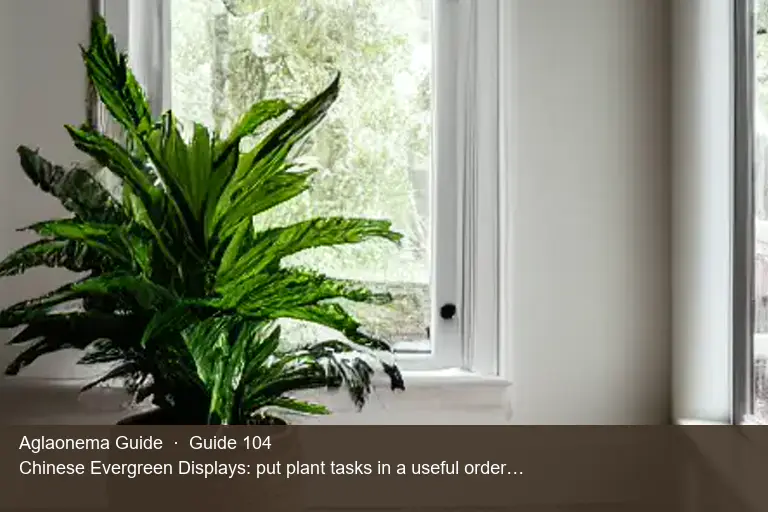
Chinese Evergreen Displays: put plant tasks in a useful order — question guide for a compact growing area; setup for a first project
Evergreen displays, such as the Chinese style, are designed to maintain a peaceful and elegant atmosphere in a compact growing area. To achieve this, it's important to arrange the plants in an order that not only enhances the overall appearance of the space but also facilitates the growing process. Here’s a step-by-step guide to help you put plant tasks in a useful order for Chinese evergreen displays in a compact growing area:
- **Select a Space**: Choose a space that is spacious enough to accommodate the plants while also providing enough room for the growing process.
- **Define the Purpose**: Determine the purpose of the display, whether it’s for aesthetic appeal, decoration, or practical use. For example, a garden display or a home decor display.
- **Plan the Layout**: Plan the layout of the display by arranging the plants in a way that is visually appealing and conducive to growing. Consider the size of the display, the height of the plants, and the space available. For instance, a large display might be arranged with a single layer of plants, while a smaller display could have a more complex arrangement, such as a combination of plants and decorative elements.
- **Consider the Space**: Ensure that the space is large enough to accommodate the display without crowding it. Consider the height of the display and the width of the display before deciding on the height of the plants. For instance, a tall display might be arranged with a single layer of plants, while a shorter display could have a more complex arrangement, such as a combination of plants and decorative elements.
- **Arrange the Plants**: Arrange the plants in a way that is visually appealing and conducive to growing. Consider the size of the plants, the height of the plants, and the space available. For instance, a single layer of plants might be arranged with a single row of plants, while a double layer of plants might be arranged with a single row of plants and a single row of decorative elements.
- **Create a Plan**: Create a plan for the growth process, including the type of plants, the lighting, the watering, the soil type, and the temperature. For example, a small display might be designed to grow in a low light environment, while a large display might be designed to grow in a high light environment.
- **Useful Order**: Use the above steps to create a useful order for arranging the plants in the display. Arrange the plants in a way that is visually appealing and conducive to growing. For example, arrange the plants in a way that is in line with the purpose of the display and the size of the display.
By following this practical task, you can help your reader put plant tasks in a useful order for their Chinese evergreen display in a compact growing area. This will enhance the appearance of the display, facilitate the growing process, and make it a more effective and enjoyable feature in their growing area.
Use this guide