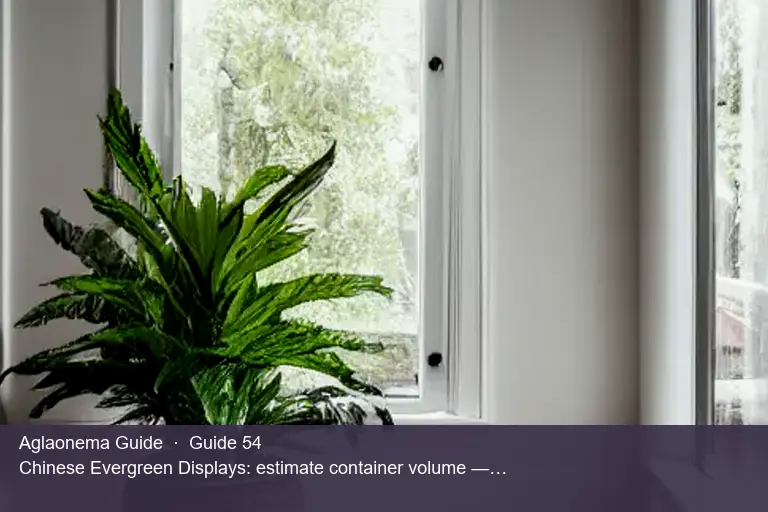
Chinese Evergreen Displays: estimate container volume — decision tree for incomplete plant labels; setup for a first project
Chinese evergreen displays are a popular choice in the evergreen landscaping industry, offering a visually pleasing and long-lasting decorative option. However, the quality and quantity of plant labels are crucial for the success of these displays. In this article, we will discuss how to estimate container volume for Chinese evergreen displays, and how to make the first project preparation for a Chinese evergreen display. We will also provide a step-by-step guide for the reader to estimate the container volume.
Step 1: Determine the container size The first step in estimating container size for Chinese evergreen displays is to determine the container size that will be used. The size of the container should be large enough to accommodate all the plants and leaves. The container size should be calculated based on the number of plants, leaves, and desired container height. For example, if the containers are to be used for a single row of evergreen plants, the container size should be 1 meter (3 feet) x 1 meter (3 feet) x 1 meter (3 feet).
Step 2: Calculate the volume of the container The next step is to calculate the volume of the container. The volume of the container can be calculated using the formula: Volume = Length x Width x Height. For example, if the container is 1 meter (3 feet) x 1 meter (3 feet) x 1 meter (3 feet), the volume of the container would be 1 cubic meter (3 cubic feet).
Step 3: Estimate the number of plants and leaves After calculating the volume of the container, the next step is to estimate the number of plants and leaves. The number of plants and leaves should be based on the number of plants, leaves, and desired container height. For example, if the containers are to be used for a single row of evergreen plants, the number of plants and leaves should be 1000 and 1000, respectively.
Step 4: Calculate the total volume The final step is to calculate the total volume of the container. The total volume of the container should be the number of plants and leaves multiplied by the volume of the container. For example, if the containers are 1000 plants and leaves, the total volume of the container would be 1,000 cubic meters (3,000 cubic feet).
Step 5: Estimate the container volume The final step is to estimate the container volume. The container volume should be the total volume of the container multiplied by the desired container height. For example, if the containers are 3 meters (10 feet) high, the container volume should be 1,000 cubic meters (3,000 cubic feet).
Step 6: Make the first project preparation After estimating the container volume, the next step is to make the first project preparation. The first project preparation should be to label the containers with the correct information. The label should include the container size, number of plants and leaves, container height, and desired container height.
Step 7: Test and evaluate the project preparation After making the first project preparation, the next step is to test and evaluate the project preparation. The project preparation should be tested by placing the containers in a natural setting and observing the quality and quantity of the plants. If the project preparation is successful, the next step is to evaluate the project preparation by comparing the quality and quantity of the plants with the desired quality and quantity.
Conclusion In conclusion, Chinese evergreen displays are a popular choice in the evergreen landscaping industry, offering a visually pleasing and long-lasting decorative option. The first step in estimating container volume for Chinese evergreen displays is to determine the container size, the next step is to calculate the volume of the container, the final step is to estimate the number of plants and leaves, the final step is to calculate the total volume of the container, the final step is to estimate the container volume, and the final step is to make the first project preparation. The final step is to test and evaluate the project preparation.